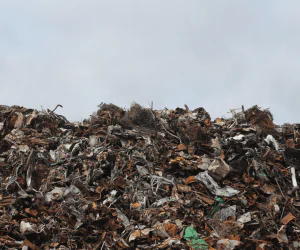
The UK’s interior fit-out industry has long worked on a “strip out and replace” model — a one-way process where tonnes of usable material get binned every time a space is refurbished. But things are changing fast.
Driven by rising costs, environmental pressure, and a clearer understanding of what materials are really worth, the sector is starting to embrace the Circular Economy — and that’s reshaping how we build, refurbish, and even think about interiors.
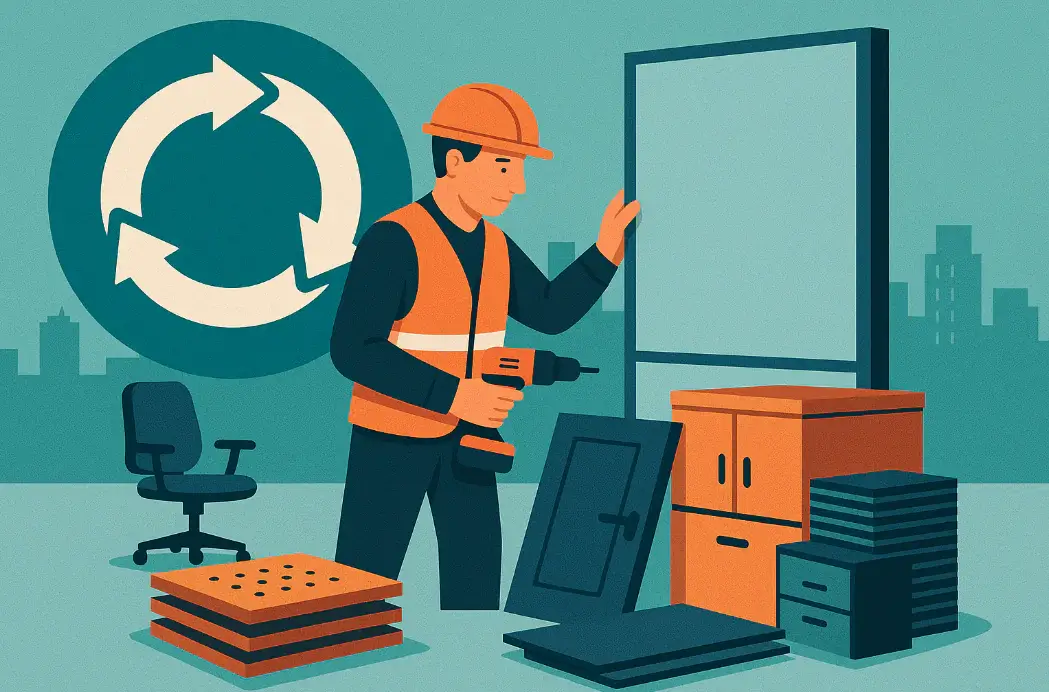
Circular fit-outs aim to keep materials in use for longer, reduce waste at every stage, and design spaces that are easier to adapt in future. It’s a smarter, more resourceful approach that’s already saving money and cutting carbon for the companies leading the way.
Circular Fit-Out: What’s It All About?
Forget the old “take, make, dispose” mindset. A circular approach means:
- Designing out waste from the start
- Reusing what’s already there
- Choosing materials and products that can be repaired, reconfigured or reused
- Creating systems that support recovery and regeneration, not just disposal
It’s about treating buildings like material banks, not future rubble.
Core Principles of a Circular Fit-Out
1. Designing for Longevity and Disassembly
This isn’t just about stretching out product life. It’s about thinking ahead — planning for a space’s next chapter, not just its current use.
- Adaptable Design
Modular walls, floors, and furniture layouts allow spaces to evolve as needs change. Instead of knocking everything down for a redesign, you move things around and carry on. - Easy Deconstruction
Materials are fixed in ways that make them simple to take apart later — no more ripping up glued floors or smashing through partitions. Mechanical fixings (like clips and screws) are used in place of adhesives so items can be removed without damage. - Pre-Refurbishment Audits
Before a fit-out starts, a materials audit helps identify what’s worth saving, refurbishing, or reselling. This “urban mining” approach treats the existing fit-out as a resource bank. JLL, for instance, saved up to 75 percent on one project by reusing materials instead of starting from scratch.
2. Maximising Material Reuse and Recycled Content
Here’s where we really start turning “waste” into value.
- Urban Mining in Practice
Ceiling tiles, raised floors, doors, lighting, furniture — all can be carefully removed and reused. Some companies, like RMF, even specialise in collecting and reconditioning raised flooring systems. - Specifying Reused and Recycled Materials
Designers are now sourcing materials that have already had a past life — like carpets made from recycled fishing nets, remanufactured desks, or cladding made from reclaimed timber. - Material Passports
This growing concept involves tagging and tracking materials digitally. Knowing exactly what’s in a building makes future reuse far more achievable and avoids the “unknowns” that usually lead to skip loads. - Product-as-a-Service (PaaS)
Instead of buying furniture or light fittings outright, businesses lease them. The manufacturer stays responsible for maintaining, repairing, and eventually reusing or recycling them. It’s better for the environment, and it often works out cheaper too.
3. Environmental and Financial Wins
Circular fit-outs don’t just feel good — they also deliver serious benefits for businesses.
- Reduced Embodied Carbon
By reusing existing materials, you cut down the need for new ones, which slashes the carbon emissions associated with manufacturing and transport. This is critical as the construction sector remains one of the UK’s biggest carbon contributors. - Less Waste, Lower Costs
Less going to landfill means fewer disposal fees. Reclaimed materials also tend to cost less, especially when sourced from the same project or locally. - Ongoing Savings
While planning and sourcing might take more thought upfront, the payback comes in reduced material spend, better lifecycle performance, and fewer disruptions down the line. - Better ESG and Brand Reputation
Companies that embrace circularity show clients, tenants and investors that they’re serious about sustainability — something that matters more and more when winning new work or attracting top talent.
4. Collaboration and New Business Models
Circularity relies on teamwork. If everyone is working in silos, it won’t get off the ground.
- Start Early
Circular fit-outs only work if designers, contractors, clients, and waste professionals are aligned from day one. Leaving salvage planning until the demolition crew turns up is too late. - New Roles and Services
There’s now a growing network of companies specialising in materials recovery, resale platforms for reclaimed goods, and specialist logistics providers to manage and track reusable materials. - Logistics for Reuse
Proper storage, protection, and redistribution of salvaged items takes planning. That means treating waste logistics with the same importance as new supply chains.
What This Means for Waste Partners Like Us
The rise of circular fit-outs is reshaping what waste companies do. It’s no longer just about removal — it’s about resource management. At We Clear Junk, we’re right at the centre of this shift.
Here’s how we’re helping our commercial clients stay ahead:
- Careful Deconstruction
We don’t just knock things down. We take them apart methodically so what can be reused, is. - Smart Segregation
On-site material sorting helps keep timber, plasterboard, metal, and fixtures separate and ready for reuse or specialist recycling. - Reuse Network Links
Whether it’s reclaimed office chairs going to a charity, or ceiling tiles headed for another site, we connect salvaged materials with the right people. - Detailed Reporting
We track what comes out of every job, where it goes, and what’s saved. That helps you hit ESG targets and prove the impact in black and white.
Final Word
The interior fit-out sector is undergoing a serious rethink. Circular economy principles are moving from fringe to front and centre — and rightly so. With the right approach, we can reduce waste, cut costs, and make commercial spaces work harder for longer.
Planning a strip-out or refurbishment?
Want to reduce waste and save money at the same time?
Talk to We Clear Junk. We’ll help you do it smarter, and greener.